
Top Force
Century Games Innovation Pte. Ltd.Strategy
4.3905.00 Reviews
- Version
- 3.5.3
- Installs
- 1.00M
- Age Rating
- Everyone
Screenshots
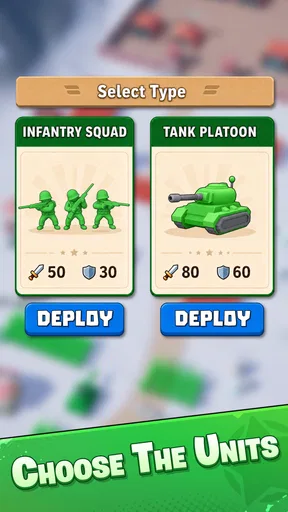
Our Review of Top Force
 Analysis by Appyee
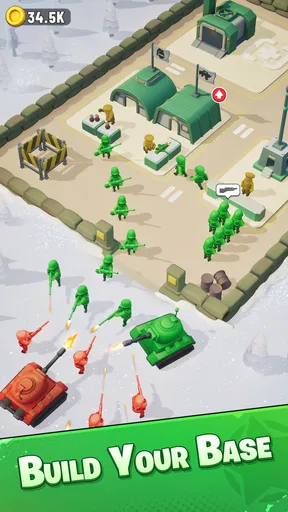
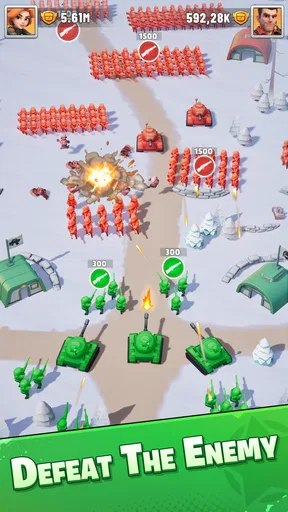
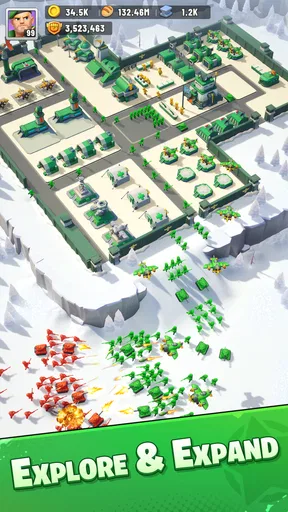
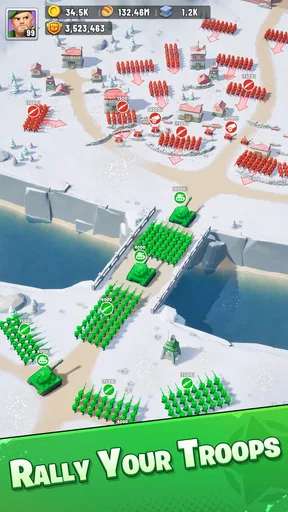
I approached Top Force as a mobile strategy game for short sessions rather than as a title I would play casually without thinking about progression. Its basic appeal is easy to understand: prepare soldiers, build up a base, and take on opposing forces. What matters in practice is how that loop feels after the first few sessions, especially when free access sits alongside optional purchases ranging from $0.99 to $99.99 per item.
My overall impression is cautiously positive. The game has a clear military-management identity, a free entry point, and enough strategic framing to appeal to players who enjoy improving an account over time. At the same time, anyone choosing it mainly for a perfectly even competitive environment should slow down before committing. The rating sits at 4.5 from around 11 thousand ratings, and the game has passed 500 thousand installs, which suggests that many players find the formula approachable. Popularity, however, does not automatically answer the more important question: whether its progression feels comfortable without spending.
How the base-building loop feels in everyday play
The strongest part of the concept is the relationship between preparation and action. A strategy game built around soldiers and a base works best when each decision has a visible consequence. I like being able to think about what deserves attention first instead of treating every tap as an isolated task. In a typical session, I would check the state of my base, decide which improvement was most useful, prepare my forces, and then consider whether attacking was sensible or premature.
That makes Top Force a reasonable fit for a player who enjoys gradual account development. It is not the kind of experience I would recommend only to someone seeking an immediate arcade match. The satisfaction comes from returning to a stronger position than before, making better choices with the resources available, and learning when not to commit soldiers to a poor fight.
A realistic everyday use case is a short evening session after work or school. I can open the game, review what needs attention, make one or two development decisions, and leave without needing a long uninterrupted block of time. That style suits mobile gaming well. The trade-off is that a player who prefers complete matches with a clear beginning and end may find the ongoing structure less satisfying than a traditional turn-based strategy game.
I also found that the base should be treated as a planning problem, not merely as a collection of upgrades. When several improvements compete for attention, I would prioritize the change that supports my immediate play style rather than automatically choosing the most impressive-looking option. If I expect to play actively, military readiness may feel more valuable. If I am checking in briefly, strengthening the foundation of the account may be the more sensible choice.
Small decisions matter more than constant tapping
One useful habit is to avoid spending every available resource as soon as it appears. Keeping a reserve gives me flexibility when an unexpected need arises, and it also prevents a single attractive improvement from leaving the rest of the base underdeveloped. This is a simple principle, but it separates deliberate play from repeatedly pressing the most obvious button.
Another practical approach is to set a purpose for each visit. I might enter specifically to improve the base, prepare soldiers, or evaluate whether an enemy is worth confronting. That keeps the session focused and makes it easier to notice whether progress is genuinely enjoyable. Without a goal, the loop can start to feel like maintenance rather than strategy.
The game is also better suited to players who accept gradual growth. I would not choose it if I wanted every session to deliver a dramatic change. Its appeal depends on patience: the base, army, and decisions need time to become meaningful. That can be relaxing for one person and frustrating for another, particularly if the game places pressure on the player to return frequently.
Where the free-to-play model changes the mood
Top Force is free to play, which lowers the barrier to trying it. That is important because the central question is not whether the theme sounds appealing, but whether the progression feels worth continuing. I could begin without paying, observe how the early loop works, and decide whether the strategic choices are enough to justify more time.
The spending context deserves careful attention. Optional purchases are listed from $0.99 to $99.99 per item. That is a very broad range, and the upper end is substantial enough that I would treat purchases as a deliberate budget decision rather than an incidental convenience. I would never recommend entering payment details before understanding what kind of benefit a purchase provides and whether it changes the pace of progress I actually enjoy.
The most important personal rule is to avoid buying simply because I feel behind. In a base-and-army game, a temporary delay can make a purchase seem urgent even when waiting would cost nothing except time. I would first close the game, decide whether I still want the item later, and only then consider spending. That pause is especially useful when the available item is near the top of the listed price range.
For a younger player, the Everyone age rating makes the game broadly accessible in content terms, but that should not be confused with unlimited spending freedom. I would still use device-level purchase controls and agree on a budget before handing the game to a child. The free download can make the cost feel invisible, while individual items can still add up quickly.
Progression pressure and the question of fairness
My main concern is not that purchases exist; it is how a player feels when progress slows and a purchase appears to offer relief. Any strategy game involving a growing base can create that tension. The healthy version gives me meaningful choices and lets patience remain a valid strategy. The less comfortable version makes waiting feel like a punishment and spending feel like the obvious escape.
I would judge Top Force over several play sessions rather than during the opening period. Early progress can be generous and exciting, while later development may demand more planning or patience. That is why I would keep notes mentally on three things: how often I feel blocked, whether my decisions still matter, and whether purchases feel optional or necessary. Those observations tell me more than the first impression.
There is also a difference between spending to save time and spending to gain an advantage. A convenience purchase can be acceptable to me if it removes repetition without undermining the decisions of non-paying players. A purchase that directly determines outcomes would make me much less interested in competitive play. The available purchase range confirms that monetization is part of the experience, but it does not by itself establish how fair every mode or encounter is.
For that reason, I would separate my expectations. As a solo progression game, Top Force can still be enjoyable if I am comfortable moving at my own pace. As a competitive strategy game, I would be more cautious and observe how much outcomes depend on preparation, time, or spending. I would not assume that a strong rating means the competitive economy will suit everyone.
How I would keep spending under control
- Play long enough to understand the normal pace before buying a shortcut or bundle.
- Set a fixed monthly limit outside the game rather than deciding during a moment of frustration.
- Keep free progression as the baseline and treat every purchase as optional entertainment.
- Do not let a previous purchase pressure me into making another one just to justify the first.
- For children, use purchase restrictions and explain that free installation does not mean every item is free.
These habits are not criticisms of the developer; they are practical safeguards for any free-to-play strategy title. They also help reveal whether the game is enjoyable on its own. If I need repeated purchases to make the basic loop tolerable, then it is probably not the right game for me.
Who should choose it, and who should skip it?
I would recommend Top Force to someone who likes military-themed base management, gradual improvement, and making decisions in short mobile sessions. It is particularly suitable for players who enjoy checking an evolving account and are willing to accept that progress may be measured over time rather than in one sitting.
I would be less likely to recommend it to a player who wants a fully self-contained strategy campaign, a clearly bounded story, or a competitive environment where spending can never affect the experience. I would also suggest skipping it if the presence of high-priced optional items is uncomfortable in principle, even when the game can be started for free. That is not a failure on the player’s part; it simply means the business model does not match their preferences.
Compared with a conventional premium strategy game, the attraction here is the lower entry cost and the convenience of an account that can develop gradually. The downside is the uncertainty and pressure that can come with optional purchases. Compared with a quick competitive game, Top Force places more emphasis on preparation and long-term growth, so it may feel slower but more rewarding to someone who likes planning.
What I would check before committing
I would begin by testing whether the core decisions remain interesting after the novelty of building the first part of the base wears off. Do I still care which improvement comes next? Do soldiers feel like a resource I am managing thoughtfully, or merely a requirement before the next action? Those questions are more useful than chasing a particular early milestone.
I would also watch the relationship between my available time and the game’s expectations. If I only have a few minutes a day, I need the routine to feel productive without becoming an obligation. If I have longer sessions, I need enough meaningful planning to prevent the experience from becoming repetitive. Top Force is most promising when it accommodates both styles without making either player feel punished.
Device compatibility is fairly approachable: the listed minimum is Android 8.0, and the current version is 3.4.5. I would still keep the game updated through the normal store process, because strategy games with ongoing progression benefit from running the current build. The developer is Century Games Innovation Pte. Ltd., so that is the publisher name I would look for when checking the official store page and avoiding similarly named downloads.
The release date shown for the game is Jul 31, 2026. Since that places it in a relatively recent release window, I would give extra weight to my own experience with stability, pacing, and updates rather than assuming the game has already settled into a final form. A newer title can improve, but it can also change how progression feels over time. I would therefore avoid making a large purchase early, before I know whether I want to remain with it.
There are also practical questions I would answer through play rather than assumption. How much can a patient free player accomplish? Does the game remain enjoyable when I ignore optional offers? Are battles decided by thoughtful preparation or mainly by account strength? The store summary gives the broad premise, but these are the questions that determine whether the game deserves a permanent place on my phone.
Three habits that improved my sessions
First, I would review the whole base before selecting an upgrade. Looking only at the next available improvement can create an unbalanced account. A quick scan helps me notice whether I am neglecting the support of my army while chasing a more visible development.
Second, I would avoid treating every enemy as an invitation. The strategic value of an attack depends on what I risk, what I gain, and whether the result supports my next goal. Declining a tempting fight can be a strong decision when preserving momentum matters more than immediate action.
Third, I would use a waiting period as a test of the game’s fairness. If I can step away, return later, and still make worthwhile progress without feeling forced to pay, that is a good sign for my own play style. If every pause produces frustration and every solution points toward a purchase, I would take that as a clear signal to move on.
My trust verdict
I see Top Force as a free strategy game worth trying, but not one I would approach with an automatic promise to spend. Its military base-building premise is clear, its broad age rating makes it accessible, and its audience size shows that the format has found interested players. I appreciate that I can test the central loop before paying, which is the right way to evaluate a game built around long-term progression.
My recommendation comes with a boundary: play it as a planning game first and a purchasing game second. Keep the free experience as the standard, watch for moments when impatience is being turned into pressure, and only spend when the value is clear and fits a predetermined budget. The listed purchase ceiling makes that discipline especially important.
In the end, I would choose Top Force when I want a mobile strategy routine centered on growing a base and preparing soldiers over time. I would skip it when I need a guaranteed level playing field, a premium one-time purchase, or a compact campaign with no ongoing monetization decisions. For the right player, it can become a satisfying daily strategy habit. For me, its trustworthiness depends less on the free download than on whether it lets patience and good decisions remain genuinely useful.
Privacy and Permissions
See what permissions an app requests and how it handles your data.
- Phone
- read phone status and identity
- Photos/Media/Files
- read the contents of your USB storage, modify or delete the contents of your USB storage
- Storage
- read the contents of your USB storage, modify or delete the contents of your USB storage
- Camera
- take pictures and videos
- Wi-Fi connection information
- view Wi-Fi connections
- Device ID & call information
- read phone status and identity
- Other
- view network connections, pair with Bluetooth devices, change network connectivity, full network access, change your audio settings, control vibration, prevent device from sleeping
Verdict
Strengths of Top Force
- Fast-paced battles are easy to learn but still offer room for tactical decisions.
- The hero roster provides varied abilities for different team-building strategies.
- Short match sessions suit quick play during commutes or breaks.
- Regular missions give players clear goals beyond the main campaign.
- The interface is clean and navigation between game modes is straightforward.
Limitations of Top Force
- Progress can slow noticeably when upgrade materials become scarce.
- Some stronger heroes and resources are tied closely to in-app purchases.
- Repeated battle animations may feel monotonous during extended sessions.
- The large number of menus and currencies can overwhelm new players.
- An internet connection is required for most gameplay features.
Other Releases by Century Games Innovation Pte. Ltd.
View All


Similar Picks in This Category
View All
Clash of Clans
Supercell4.5

Plants vs. Zombies™
ELECTRONIC ARTS3.7

Lords Mobile: Kingdom Wars
IGG.COM4.5

Clash Royale
Supercell4.4

State.io — Conquer the World
CASUAL AZUR GAMES4.1

Car Driving School : Car Games
Spark Game Studios3.9
Frequently Asked Questions
What is Top Force, and what type of game is it?
Top Force is a mobile strategy and progression game focused on building a powerful force, upgrading units, completing missions, and competing through different game modes. Players generally spend time improving their base or team, managing resources, unlocking stronger characters or equipment, and taking part in battles. Its appeal comes from combining short gameplay sessions with long-term progression and regular objectives.
Is Top Force free to download and play?
Top Force can generally be downloaded and started without an upfront purchase, but it may include optional in-app purchases. These purchases can provide resources, upgrades, special bundles, or faster progression. You can play without spending money, although some upgrades may take longer to obtain. Before downloading, check the store listing for the current pricing, supported payment methods, and any age or purchase restrictions.
Does Top Force require an internet connection?
An internet connection is usually important for Top Force because the game may need to synchronize progress, load events, connect to competitive features, and validate account information. Some sections may appear accessible during short periods without a connection, but offline availability can be limited and should not be assumed. A stable connection is recommended, especially when claiming rewards or participating in online battles.
Is Top Force suitable for children?
Whether Top Force is suitable for children depends on the age rating shown in the Google Play Store or Apple App Store, as well as your family’s preferences. The game may contain strategic combat, advertising, online interactions, and optional purchases. Parents should review the store rating, enable purchase controls, and check privacy settings before allowing younger players to use the app regularly.
What should I know about progression and in-app purchases in Top Force?
Progression in Top Force typically involves completing missions, collecting resources, upgrading units, and making careful decisions about which improvements to prioritize. Optional purchases may speed up development or provide additional items, but they are not necessarily required to explore the main gameplay. Players who prefer a free experience should manage resources carefully, claim available rewards, and avoid spending impulsively on temporary offers.
Play our best games!


